February Flowers To Forage- Wild Primrose and Sweet Violet

Updated: Feb 9

Early February can be a tricky transitional month, snow is more likely to fall in this month and the landscape can appear washed out after a long winter but signs of spring's imminent arrival are all around. Early spring flowers are starting to appear including Sweet Violets (Viola odorata) and Wild Primroses (Primula vulgaris). And how very welcome they are too!
Wild Primrose (Primula vulgaris)
One of the first blooms of the year, heralding the coming of spring is the Wild Primrose whose cheery spring yellow flowers can often be found in woodland and clearings. Primroses are perennials and their presence in woodlands indicates ancient habitat.
These early treasures have wrinkly leaves that are hairy on the underside and have pale to deeper yellow flowers. Leaves and flowers are edible and there is not much else around to confuse primroses with.

Health Benefits of Wild Primroses
The leaves, flowers and roots of the Wild Primrose can be used medicinally, Primroses contain a saponin called Primulin and the flowers and roots produce a fragrant oil. The whole plant posesses sedative qualities and as a history of use for 'nervous disorders','hysteria' restlessness and insomnia.
Wild Primroses are antispasmodic, astringent, emetic, expectorant and vermifuge in action.
A decoction of the root was said to treat nervous headaches (Modern Herbal), although I cannot recommend any digging of these, or indeed any other wild plants, please refer to the Wildlife and Countryside Act, 1981. If you grow these on your own land it would be another matter.

Cosmetic Use of Primroses
A salve made from both the leaves and flowers of Wild Primrose can be used for skin ailments and wounds. Wild Primrose can help reduce pimples and wrinkles.
Wild Primrose Salve
60 ml Wild Primrose-infused Oil (see below)

34 g Soft butter eg Mango or Shea
5 g Beeswax
1-2 drops Vitamin E
Wild Primrose-infused Oil
Infuse Wild Primrose leaves and flowers in oil slowly over gentle heat in bain marie for at least 2 hrs then strain
Salve
Heat beeswax in a bain-maire until melted
Add your butter and blend in with the beeswax
Slowly add the infused oil, whisking in
Remove from the heat and continue whisking adding vitamin E
Pour into clean, sterile jars before it sets
Eating Wild Primroses
The lovely flowers can be drunk as a tea or added to salads as an edible flower, the flowers are mild and sweet to taste.
The leaves traditionally were used to make a potage, they have a bitter taste but this is associated with gut health benefits and a stimulating action on digestive processes. They can be chopped and added to salads or eaten as a vegetable.
Wild Primrose Infusion
A handful of freshly picked Primrose Flowers
Boiling Water
Honey to taste
Place your Primrose flowers in a teapot and pour over the boiling water
Leave to infuse for 5-10mins
Add honey to taste (if required)
Strain


Wild Primroses combine well with Violet Flowers and their actions compliment each other, mix in infusions to treat coughs and catarrh or for a calming effect.
Sweet Violets (Viola odorata)
These little beauties are one of my absolute favourite wild herbs, they are dainty, delicate and quite fascinating low-lying dwellers of the woodland floor.

You may see Violets of differing colours and shades when foraging, they vary from white, pale pink, pale purple throught to a deeper purple. They are all perfectly safe to use. Later in the spring the Dog Violets appear, these have medicinal uses but lack the distinctive scent of the Sweet Violet, hence the prefix 'Dog' which is applied to plants considered to have less value.
The scent is the best indicator of Sweet Violets, but they are usually one of the first flowering plants in Feburary.
Health Benefits of Sweet Violet

Sweet Violet flowers, leaves and roots all have medicinal uses, however the roots are best left alone as the Wildlife and Countryside Act advises (as with all native wild plants), we should not be digging them up.
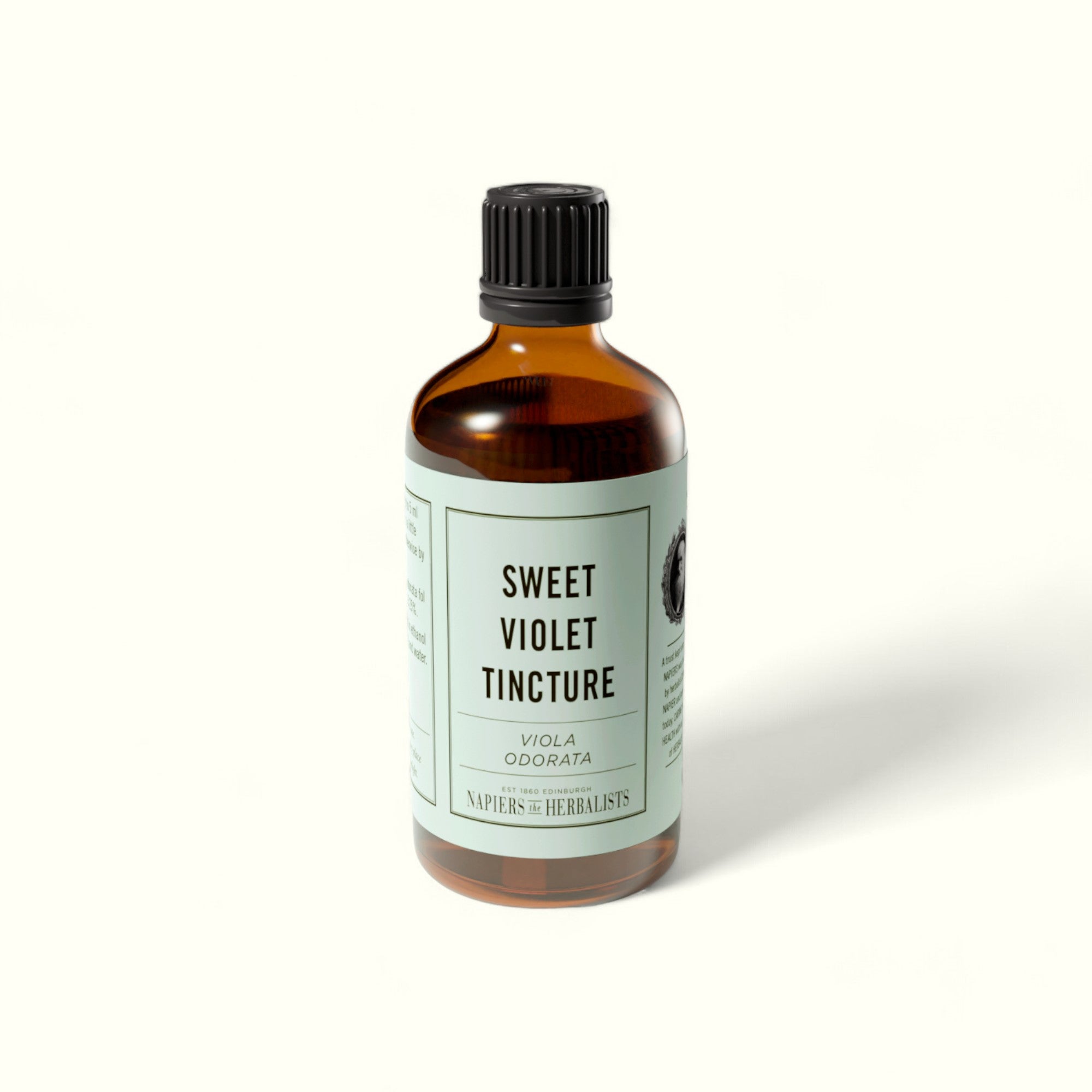
Violet flowers and leaves can be infused as a tea, in oils, vinegar, glycerin or used as a tincture. Due to the salicylic acid (like aspirin) content, Violet is anti-inflammatory and anti pyretic (reduces fever). An infusion is indicated for headache relief and due to its sedating effect, also for insomnia.
Infusions of the flower are recommended for inflammed stomachs as Violets are cooling and soothing to mucous membranes. They will benefit gut health too due to anti-microbial action.
A Violet infusion can be gargled for sore throats, and used to create a poultice for swollen glands, boils and abcesses.
Sweet Violet Poultice
Simply soak muslin cloth or bandage in Sweet Violet infusion and apply to skin. You can apply the infused flowers directly too. This can be applied to bruised skin, the salicyclic acid will reduce pain and inflammation.
For a drawing poultice, indicated for boils and abcesses, mix a Violet infusion with a handful of green clay and apply that to the affected area. Leave to dry for 5-10 mins then wash off.
The roots are expectorant in action as they contain alkaloids, Violet makes a great cough syrup for coughs, colds and catarrh.
Violet helps protect the liver and is a detoxifying plant, an infusion of the flowers is gently laxative too.
Cosmetic Uses Of Sweet Violet
The unique scent of Violet is used extentsively in cosmetic and harnessed by the perfume industry it is characteristically sweet, floral and woody.
Violet is a cool, moist, calming and hydrating plant. As a mucilagonous plant Violet is demulcent and therefore very suitable for dry skin and conditions like eczema.
A preparation containing Violet would be indicated for acne as it calming, anti-inflammatory and has anti-bacterial properties.
Violet contains salicylic acid which gives her healing, soothing, and pain relieving properties. Violet has antifungal properties and the ability to act upon abnormal skin cells, making Violet a potentially useful treatment for skin changes associated with the development of skin cancer.
Sweet Violet Vinegar
Pick a quantity of dry violet flowers and place in clean, sterile jar, cover with vinegar and leave to infuse for a couple of weeks. I tend to use apple cider vinegar but any mild vinegar would do. Strain and bottle.
This beautiful vinegar can be used as part of a salad dressing or for medicinal or cosmetic purposes. I use mine for any sort of sting and apply it straight on.
Violet vinegar makes a lovely footbath when added to the water, anti-fungal properties may be useful here alongside the cooling and soothing actions
The vinegar can also be incorporated into a hair rinse.
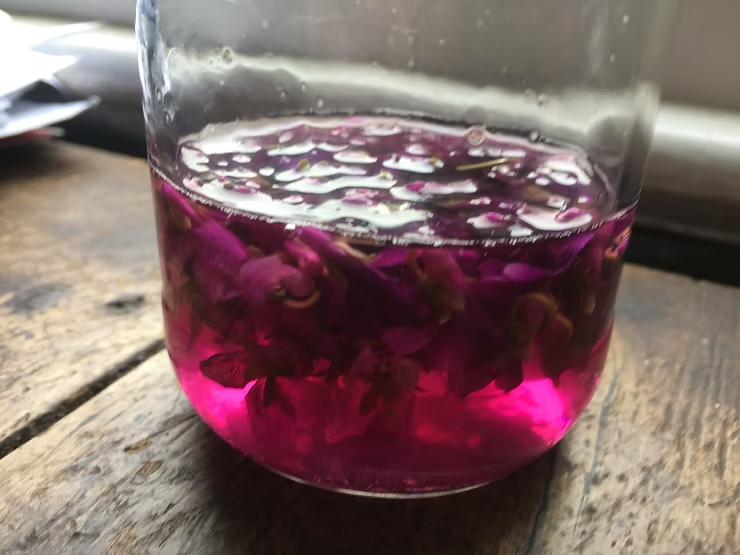
Sweet Violet Toner
40 ml Sweet Violet-infused Vinegar
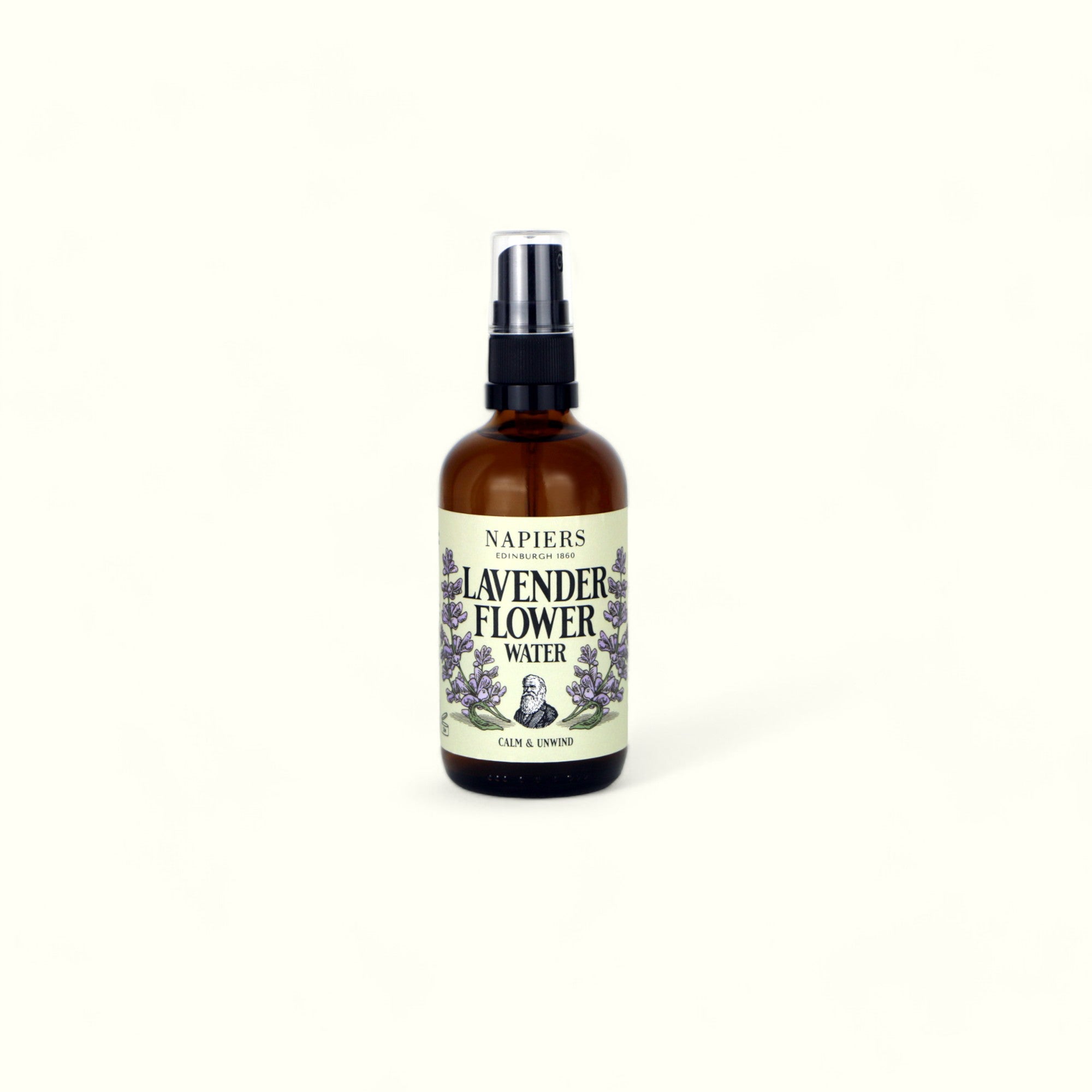
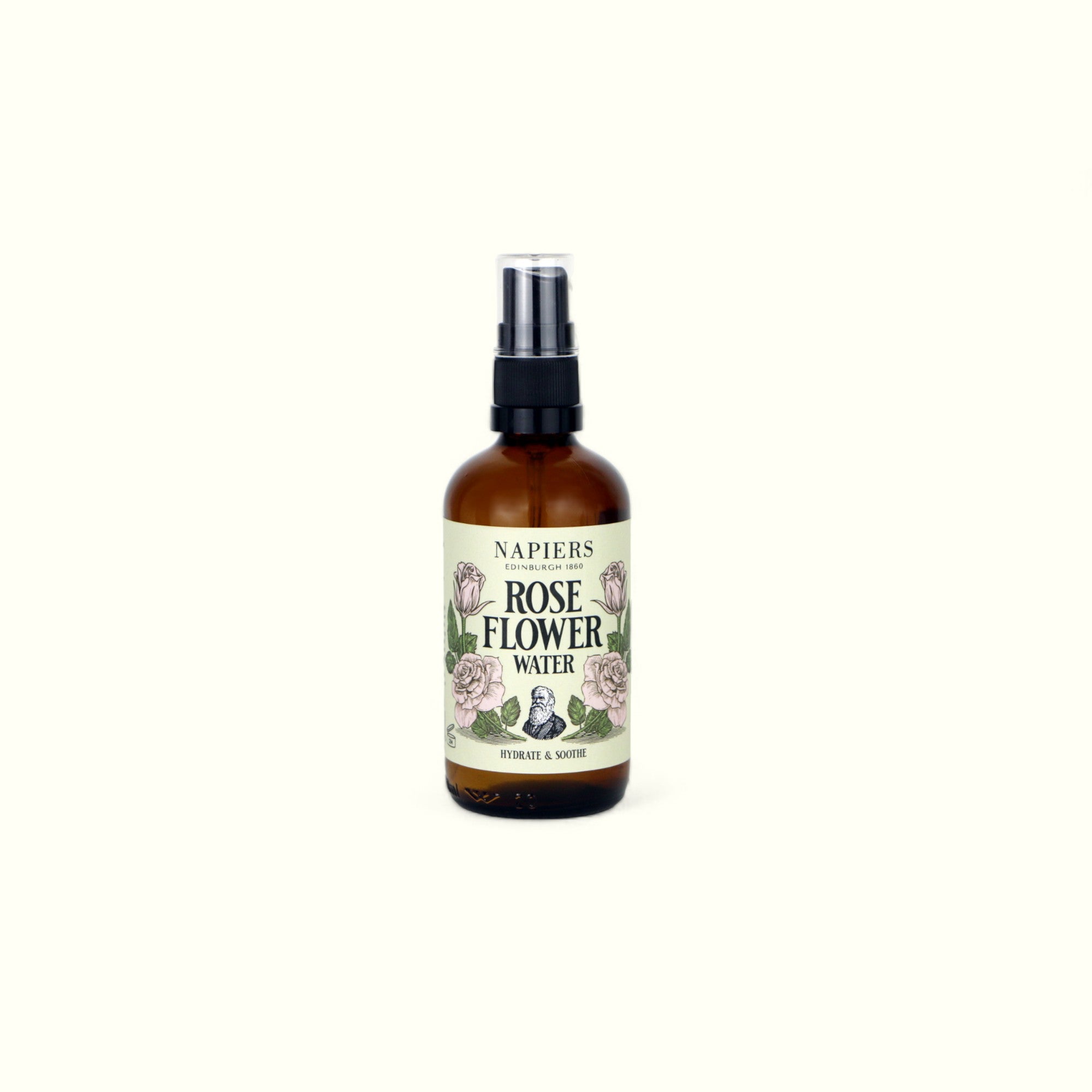
60 ml Lavender Hydrosol or other floral hydrosol
Mix the two together, bottle in a sterile container or spray. Apply after cleansing - either with cotton wool or spray.
Sweet Violet Face Mask
50 ml Sweet Violet Infusion
1 tbsp Green Clay
Mix well together and apply to skin, leave to dry for 5-10 mins and wash off
Sweet Violet-infused Oil
Quantity of flowers and leaves
Carrier oil of choice
If using fresh plant material to infuse, do so straight away and use a warm infusion with a double boiler. Add vitamin E to your finished oil to prevent any rancidity.
Salves/balms or ointments made from Violet would be excellent for wound heaing and burns. Follow the amounts for Wild Primrose Salve. If either is too hard, adjust your ratios of wax to oil or vice-versa if too soft.
Edible Uses
Violets have long been associated with confectionary due to their distinctive sweet and floral taste. The flowers can be crystallised or made into Violet Sugar.

The edible flowers make a striking garnish or can be frozen within ice cubes.
Violet flowers contain high levels of vitamins C and A.
Sweet Violet Syrup
This gorgeous coloured syrup can be used for culinary uses, to add to drinks and cocktails or taken as a medicinal syrup for coughs.
Collect enough violet flowers to fill a jar of any size (a long, fiddly job) on a dry day.
Place in a clean jug or bowl. Boil the kettle and pour over enough water to cover the violets well and leave overnight.
Strain through muslin cloth and place the infusion in a double boiler or bain marie.
Bring to a gentle simmer and add some sugar, 1 cup of sugar for every 1 cup of liquid.
Simmer until the sugar has dissolved in the infusion.
Bottle in clean, sterile bottle and refrigerate for 6 months max.
Early spring Flower Honey
Using both Violet and Primrose flowers, this honey is perfect for detoxifying the lungs and clearing respiratory airways after a long winter lacking fresh air, perhaps with persistent allergy and infection symptoms.
Using a double boiler, gently heat a jar of honey
Once liquid, add the flowers to the honey
Gently infuse on a low heat for 2-3 hours
Strain and return to jar

Ingredient Sourcing
Affiliate Links
This post may contain affiliate links, meaning I get a small commission if you decide to make a purchase through any links. This is at no extra cost to you.


Comments