Exploring Ayurveda And Herbal Heritage In India- An Interview With Virginia Compton


A new year and new destinations to be explored for my 'Herbal Travel Directory', looking towards South Asia, a subcontinent incredibly rich in herbal heritage and birthplace of Ayurveda. To begin my deep dive into the herbal delights of India I decided to interview Virginia Compton, an Ayurvedic Practitioner and Devi devotee who bases her practice between Devon and Kerala.
I caught up with Virginia on her most recent adventure in India, somewhere between Kerala and Tamil Nadu. Virginia has come to love this amazing country and has established many alliances in India, both friendships and business partners. She regularly introduces groups from the United Kingdom to India, facilitating their experience of Auryvedic practice in its heartland and guiding their exploration of this deeply spiritual country.
I began by asking Virginia, a former NHS nurse, what first drew her to India and what it is about this country that has continually drawn her back.
On turning 40, Virginia and her partner had a conservation which was to set the course of their lives, should they start a family or travel? The desire to vist India was strong, off they went together on their first trip where they fully immersed themselves, very quickly taking in many places. They returned several more times over the following years, a passion for India endured, sadly their relationship did not.
In 2018, Virginia embarked on the first of many solo trips to India, these were often for prolonged periods as her visa would allow. Her deepening connection with Ayurveda naturally led her to its heart, beautiful Kerala described as 'god's own country' and the origin of India's traditional and ancient healthcare system.
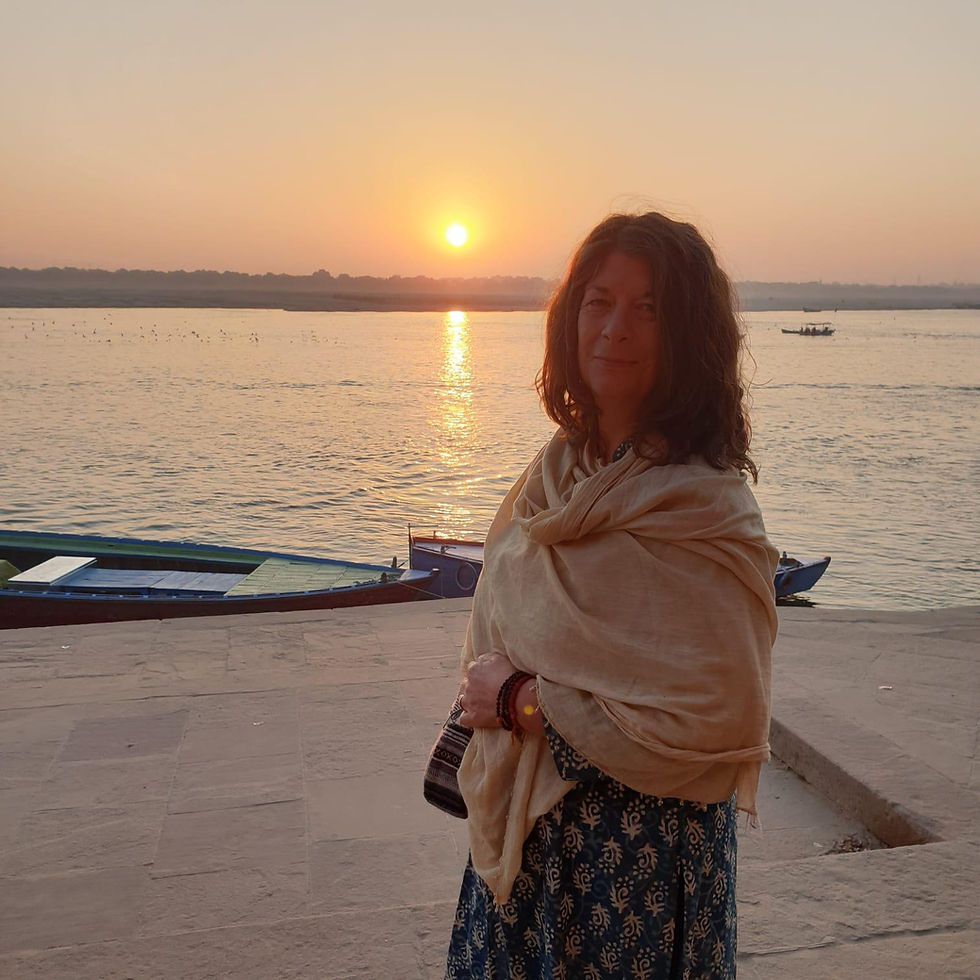
During these prolonged visits, Virginia deepened her connection with this beautiful place, getting know to local people and the ayurvedic commmunity whilst all the time progressing along her own spiritual path.
Virginia tells me that Ayurveda is hugley prominent in India, paticularly in Kerala where everywhere you look you will see ayurvedic clinics, pharmacies and hospitals.
The whole approach to life has captivated her, the hospitality of the people and their friendly, welcoming approach to others. Virginia tells of a sense of community and a natural affection even between strangers. She describes a sense of "everybody being all in it together" in stark contrast to the West, where people seemingly compete. That observation really does resonate with me. The concept of karma may account for some of this, people accept the limits of their own power and influence on outcomes, overall there is a more relaxed outlook.
Virginia works both here and in the UK as a yoga teacher and ayurvedic practitioner, running classes, courses and retreats. Initially the yoga inspired her interest in India, the Ayurveda has since taken over. She regularly takes small groups out to India to share with them her knowledge, allowing them to safely to immerse themselves in an authentic ayurvedic experience . After her groups have returned home, Virginia likes to take time to rest and recharge, ready for her next offerings.
As mentioned earlier, Virginia offers authentic Ayurveda in India and in the UK but she finds in India it is commonly integrated into the daily lifestyle and although not every Indian practices Ayurveda, it is widely accepted and understood. The difference in the UK is that Ayurveda is linked with other alternative health systems and still viewed as a little 'weird'.
As my focus is on destinations for herbal tourism, I asked Virginia what her experience of herbs and herbal medicine has been in India. She tells me how herbs are central to everyday life and how they are integral to therapeutic practices.
Herbs and spices are used daily here and fully ultilised in the cuisine, as the mantra goes 'food is medicine' and a hugely important part of an Ayurvedic lifestyle. There are many other aspects to Ayurveda including yoga, meditation and daily routines, herbs are important, but are one part of a whole system.
When seeing a patient Virginia often works on other aspects of their health and lifestyle before adminstering herbs. She has found that once the individual has embodied these suggestions then the herbs will work much more effectively. The body needs to be functioning well to fully absorb the herbs and ultilise them.
Herbs are very visible and available in India,they can be found on every street corner and in gardens and wild spaces. Medicinal plants are prolific, both grown and foraged. It is not only easy to source herbs but also to get information on them
Virginia does warn that when sourcing herbs in India it is important to be aware of the plant quality. In India, like so many places, herbs are being treated like pharmaceuticuals, moving away from the traditional methods of preparation. Decoctions were used to prepare medicinal plants for therapeutic use, this method is perhaps losing favour because of the taste. Sadly this may reduce the effect of herbs as the 'bitter' taste is part of the therapeutic process.
My next question to Virginia concerns my favourite subject, herbal heritage and how imortant it is to the people here, both culturally and economically.
Virginia tells me that not all Indians practice ayurveda and not all the food available is ayurvedic, but ayurvedic herbs are common, visible and important. To give some perspective to the standing of Ayurveda in India, Virginia explains how the Indian government promote ayurveda and funds its research.
In rural areas and in the south, Ayurveda remains at the heart of healthcare but is becoming less so in the cities. Again for comparison to the West, Virginia points out that significantly every airport in India has an ayurvedic pharmacy.
In rural areas during the covid pandemic, Virginia's business partner who runs a small hospital, treated the local population and amazingly they did not have one death. Ayurveda is very much rooted here in the hills and small villages where they still rely on this ancient medicine and pass down their knowledge orally through the generations.
When I asked Virgina the question of which is her favourite herb, she set me right "it depends" was her answer, this indeed should be the answer of any practitioner who knows and deals with medicinal plants. The choice of herb depends on the person, their condition and what they need at that time. They are all amazing, Virgina adds- there are so many to use in different ways and in different combinations either internally or topically, as powders, oils and many other preparations.
Virginia has noticed the tendency for people tend to jump on one herb, most recently Ashwagandha was 'trending' and appearing in main-stream coffee shops. It isn't always appropriate to make herbs into products, herbs are strong medicinal substances to be used respectfully.
Finally, I asked Virginia about travelling around India as a woman solo and if she could share her experience. Does she have any advice for others considering to the same?
Virginia tells me that India, like anywhere, is perfectly safe the majority of the time and she herself has never felt unsafe. She explains that you should fully use your common sense and trust your instincts. Virginia has her own rules including to never arrive anywhere new at night and to leave straightaway if something just doesn't feel right. Always let someone know where you are going and do your research, Indian cities, like all big cities have their dodgy areas. India can certainly feel scary, it's full on and the sensory overload can feel intense with so many people and so much going on.
Finally, Virginia explains that the sense of karma and justice in India is strong, concluding that people are generally friendly and want you to be ok. It is important to them that you enjoy your time here.

I would like to express my gratitude to Virginia for sharing with me her valuable insights into India, Ayurveda and herbs.
If you get the chance to experience Virginia's unique 'east meets west' perspective on Ayurveda, join Virginia either in India, Devon or online.
Virginia's next group trip to India for an authentic Ayurvedic immersion is March 2027
but if you cant wait until then catch Virginia in Devon or online courses here


Comments