What To Forage In March

The spring plants are arriving thick and fast now, everyday I spot new growth and this month I have focused on some key detoxifying plants that could be used as part of a Spring Equinox cleansing ritual or detox. My main detox plants this month have been Nettle, Cleavers, Coltsfoot and Birch Sap but there are still the plants I covered in February's guide that are very much fresh and available right now. Here's a recap of these plants and a couple extra that you might consider trying.
Wild Garlic
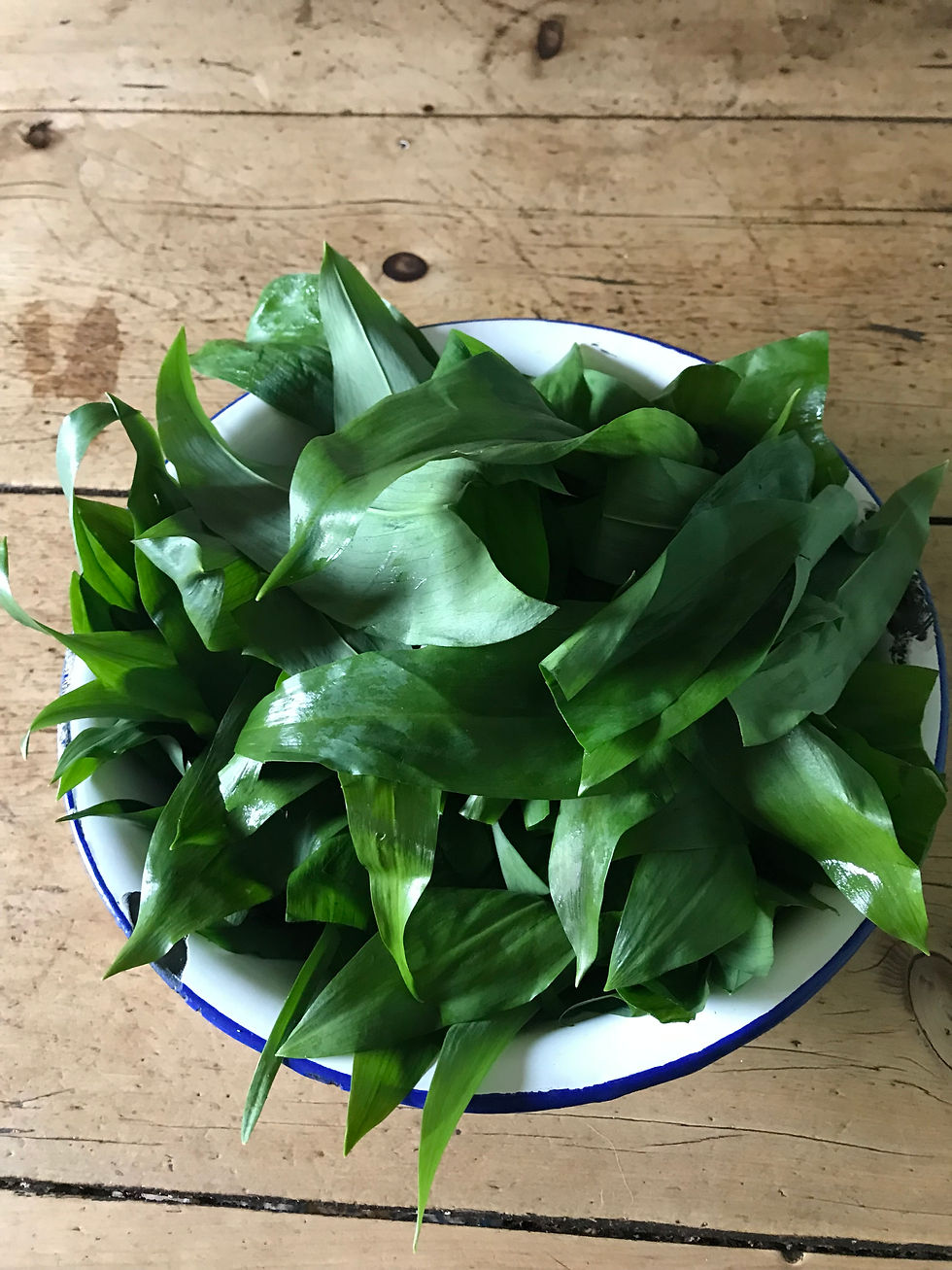
Wonderful Wild Garlic leaves are fresh and abundant in March, as spring races by they loose their early softness and become a bit more tough. Wild garlic is also an excellent plant for detoxification.
Revisit my Foraging Wild Garlic Post for the many ways to use this delicious plant.
Three-cornered Leek

As above really, these have not yet flowered and the leaves are at their freshest, revisit Three-cornered Leek post
Sweet Violets

Pictured above with Wild Primroses which you will still find now. Sweet Violets should be flowering away merrily throughout March see my post here. These are also a great ingredient to add to my Spring Detoxymel.

Hawthorn
The first Hawthorn leaves are just appearing in the hedgerows, fresh, bright and a vibrant green. Like the Wild Garlic leaves they are soft and nice to use at this point for food. The taste is slightly bitter indicating great gut health benefits.

Hawthorn is for heart health, helping to improve the ability of the heart to pump blood effectively. It is used for anxiety-related heart issues such as palpitations, to improve the circulation and reduce high blood pressure.
Hawthorn leaves, flowers and berries are all used medicinally.
Hawthorn leaves can be added to salads raw or any dish either cooked or raw, they are nutritious and due to their impressive health benefits are considered a nutraceutical.
Magnolia

It's that time of year again when the magnificent Magnolia flowers provide the most stunning display. Although not a wild foragable, the Magnolia buds and petals are a popular choice for eating due to their unique gingery/floral flavour. Choose young flower buds, ideally partially open and eat raw in salad, stir fry or pickle in vinegar. Make an infusion from the lovely petals.
Magnolia flowers and bark are used medicinally, being very popular in Traditional Chinese Medicine, they have uplifting and calming properties.
Chickweed

Chickweed is displaying pretty little star-like flowers right now and is another detoxifying plant check out my previous post on this lovely little plant.
Purple Archangel (Lamium purpureum)

This member of the Nettle family is often know as the 'bumblebee flower' as it is so beloved by them, unlike its relative the Stinging Nettle this plant has no sting. The hairy, aromatic leaves can also have a purple tinge.
It can easily be mistaken for a very similar looking Lamium Henbit, both are edible plants. The flowers of the Henbit are more hooded in appearence and longer.
It is quite different to tell them apart, so much so that im not 100% on my id, but as I said both are edible and no harm will come from mixing them up.


Comments